How Does Laparoscopic Appendectomy Minimize Surgical Trauma?
Appendicitis is not something you sit on. Every hour matters, because the risk of rupture, infection, and serious complications climbs the longer you wait. A laparoscopic appendectomy addresses the urgency while keeping the impact on your body as small as possible: small incisions, specialized instruments, less tissue disruption, and a recovery that gets you back on your feet faster.
What Is a Laparoscopic Appendectomy?
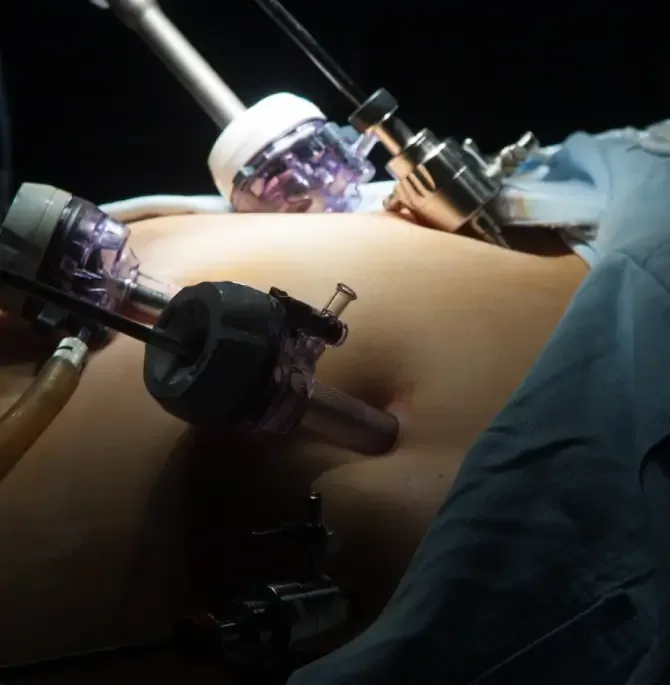
Nobody wants surgery, but if your appendix needs to come out, how it comes out matters. A laparoscopic appendectomy skips the large incision entirely. Your surgeon makes a few small openings, slides a tiny camera inside to see exactly what is happening, and removes the appendix with instruments designed for precision in tight spaces. This approach generally results in smaller scars and may reduce postoperative discomfort and recovery time compared with open surgery.
Why Is Minimizing Surgical Trauma Important?
The less your body has to heal from, the easier recovery feels. Minimizing unnecessary tissue damage during surgery gives your body a head start on getting back to normal.
- Less disruption to muscles and surrounding tissues
- Smaller surgical wounds
- Reduced postoperative discomfort for many patients
- Lower risk of wound-related complications
- Earlier return to normal activities in many cases
- Smaller scars compared with traditional open surgery
How Laparoscopic Appendectomy Minimizes Surgical Trauma
The reason laparoscopic surgery is gentler on your body is not just the smaller incisions. It is everything about how the procedure is built. Here is what makes the difference:
Uses Smaller Incisions
A few small incisions mean less cutting, less disruption to your abdominal wall, and less tissue your body has to repair afterward. It is one of the biggest reasons laparoscopic recovery tends to be easier than open surgery.
Provides a Clear Internal View
A laparoscope has a small camera that gives the surgeon a magnified view of the abdominal area. This can help the surgeon identify the appendix and surrounding structures while performing precise surgical movements.
Reduces Tissue Handling
Working through small openings means the surgeon can reach the appendix without pushing aside or exposing the surrounding tissue the way open surgery requires. Less handling means less irritation afterward, and that is something your body notices during recovery.
Supports Faster Recovery
Smaller incisions and less tissue disruption add up to one thing most patients care about: getting back to normal faster. Many people return to everyday activities sooner than they would after open surgery, though everyone heals at their own pace.
May Reduce Postoperative Pain
Because laparoscopic appendectomy uses smaller incisions, patients may experience less postoperative pain than they would after open surgery. Pain levels still vary based on the individual and the complexity of the procedure.
Is Laparoscopic Appendectomy Suitable for Everyone?
Laparoscopic appendectomy is the go-to approach for most cases of appendicitis, but it is not always the right one. If the infection is severe, inflammation is widespread, the appendix has ruptured, or there is a history of abdominal surgery, your surgeon may recommend a different approach. The decision is never about preference. It is about what is safest for you based on what they find.
Final Thoughts
Appendicitis is urgent, but the way it is treated does not have to leave you with a long recovery. Laparoscopic appendectomy uses smaller incisions, careful tissue handling, and precise visualization to remove the appendix with less surgical trauma than traditional open surgery. If you are dealing with appendicitis or need an evaluation, Advanced Houston Surgical can walk you through your options. Call (713) 263 3900 to learn more.

About the author: Dr. Rizwan Chaudhry
Dr. Rizwan Chaudhry is a board-certified bariatric and general surgeon in Houston. He completed his general surgery residency at the Mayo Clinic and a fellowship in advanced laparoscopic and bariatric surgery at the Cleveland Clinic, and he is Medical Director of the Weight Loss and Metabolic Center. At Advanced Houston Surgical he performs weight loss, anti-reflux and general surgery. Read Dr. Chaudhry’s full bio.
Medical disclaimer: This page is for general information only and is not a diagnosis or medical advice. Results vary from patient to patient. Please talk with a qualified physician about your own situation. Read our full medical disclaimer.