Laparoscopic Ventral And Inguinal Hernia Repair in Houston, TX

A hernia often begins as a small, barely noticeable bulge. But left alone, it tends to get worse. It can become painful and start getting in the way of everyday things like bending or just moving around comfortably. At Advanced Houston Surgical, Dr. Rizwan Chaudhry performs laparoscopic ventral and inguinal hernia repair in Houston, TX, using minimally invasive techniques.

What Is a Hernia?

A hernia happens when an organ or fatty tissue pushes through a weak spot in the muscle wall. It can occur in different areas of the abdomen and groin. Its symptoms vary quite a bit from person to person. Some people notice it right away, while others go weeks or months without realizing anything is wrong. The two main types we treat are:

  • Ventral Hernia: These hernias occur due to the protrusion of tissues through a weak area in the abdominal wall. Ventral hernias can be found anywhere in the anterior abdominal wall. There are cases wherein ventral hernias appear in the location where a patient underwent surgery, which is known as an incisional hernia.
  • Inguinal Hernia: This common hernia type occurs in the groin area when tissue (usually part of the intestine) pushes through a weak spot in the lower abdominal muscles. Men are more likely to develop inguinal hernias, but they can occur in women, too.
Laparoscopic Ventral And Inguinal Hernia Repair

What Is Laparoscopic Hernia Repair?

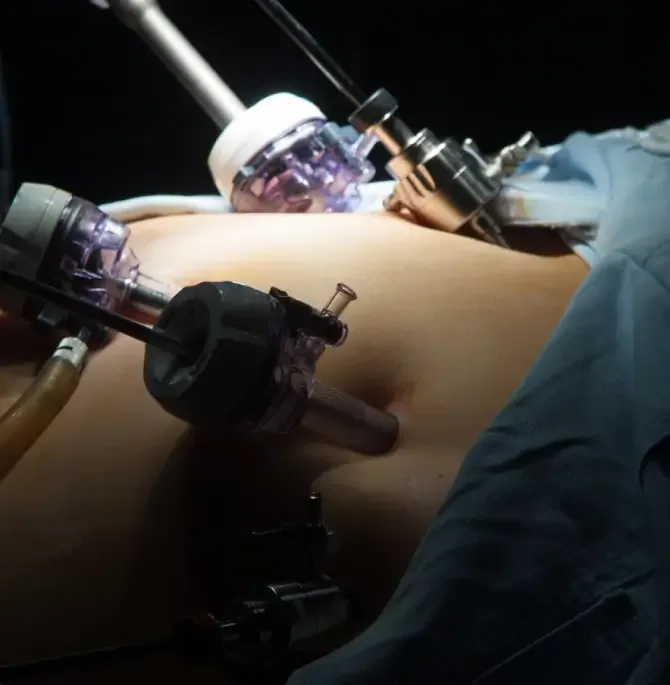
Laparoscopic hernia repair is a less invasive way to treat a hernia. Rather than one large incision, the surgeon works through a few small ones. A thin instrument with a camera on the end, called a laparoscope, lets the surgeon see everything on a screen as the procedure is done. Your surgeon repairs the hernia and inserts a mesh to strengthen the weak area in the muscle wall in most cases.

What Happens During the Procedure

Dr. Chaudhry will go over your symptoms and medical history during the consultation. He will explain what the procedure looks like and tell you how to prepare, including what to eat or avoid in the days before surgery.

The procedure is done under general anesthesia. Dr. Chaudhry works through a few small incisions using the laparoscope. A mesh implant is placed to reinforce the weak spot and reduce the chances of the hernia returning. Most surgeries wrap up somewhere between 45 and 90 minutes, depending on what the repair involves.

Most patients go home the same day, but some may have to stay overnight, again depending on how difficult the repair is. You can expect some soreness around the incision sites for the first few days. Many patients return to light activity within one to two weeks, though full recovery timelines vary depending on the type of repair and the patient’s overall health.

If your profession demands heavy lifting or physical labor, you may take a bit of extra time before you’re ready to get back to full activity. Dr. Chaudhry follows up with every patient after surgery to check on healing and make sure recovery goes smoothly.

When to Seek Emergency Care

Most hernias are not an emergency, but there are situations where you need to get to the hospital right away.  If the bulge suddenly becomes hard or turns red or dark in color, that is a sign the hernia may be strangulated.

Other warning signs include sudden severe pain that comes on quickly, nausea and vomiting alongside abdominal pain, and being unable to pass stool or gas. These are serious symptoms that need immediate medical attention.

Reasons to Choose Advanced Houston Surgical

Our board-certified surgeon, Dr. Chaudhry, completed his general surgery residency at the Mayo Clinic and his advanced fellowship training at the Cleveland Clinic. Minimally invasive surgery is a primary focus of Dr. Chaudhry’s practice and something he has dedicated years of specialized training to.

Dr. Chaudhry treats a wide range of hernia cases, including complex and recurrent hernias. Every patient gets a treatment plan that is built around their specific situation. Dr. Chaudhry takes time to evaluate each patient’s condition thoroughly before recommending anything.

FAQs

Will the hernia come back after surgery?

Using mesh during hernia repair significantly lowers recurrence risk. Both laparoscopic and open mesh repairs can provide durable results when appropriately selected.

Will hernia surgery hurt?

You may feel some pain after surgery, but most patients say it’s much easier to handle than they expected. Pain after surgery is usually treated with medication and generally gets better in a few days.

Can I drive myself home after surgery?

No. You will need someone to drive you home and stay with you for the first night since the procedure is done under general anesthesia.

What Our Patients Are Saying

Highly Rated Bariatric Surgical Care

Book Your Appointment Today!

If a hernia has been causing you pain or holding you back, we offer laparoscopic ventral and inguinal hernia repair in Houston, TX. Call us at (713) 263 3900 to book your appointment.

Latest News

  • Patient Education

    What Should You Eat After Paraesophageal Hernia Repair?

    Patient EducationBy Dr. Rizwan ChaudhrySeptember 30, 2026

    After paraesophageal hernia repair, your diet may need to change temporarily. Discover food choices and eating habits that can make…

  • Patient Education

    How Does Sleeve Gastrectomy Affect Hunger and Appetite?

    Patient EducationBy Dr. Rizwan ChaudhryAugust 30, 2026

    Wondering how sleeve gastrectomy affects hunger and appetite? Find out how the procedure changes stomach capacity and may influence hunger…

  • Patient Education

    Can Weight-Related Arthritis Affect Younger Adults?

    Patient EducationBy Dr. Rizwan ChaudhryAugust 15, 2026

    Excess weight can place added stress on joints at any age. Learn how weight-related arthritis may affect younger adults and what can help…

  • Patient Education

    Is Laparoscopic Appendectomy Safe and Effective?

    Patient EducationBy Dr. Rizwan ChaudhryJune 30, 2026

    Discover how laparoscopic appendectomy works and why it is a commonly recommended procedure for treating appendicitis with minimally…

View all articles