When Is Hemorrhoid Surgery Recommended?
Not all hemorrhoids require surgical treatment. Many can be managed successfully with lifestyle changes and office procedures. Surgery is usually considered in the following situations:
- The hemorrhoids are large or permanently prolapsed.
- Recurrent major bleeding not controlled with other treatments
- Pain relief not obtained with conservative treatment
- Other office procedures, such as rubber band ligation, have been unsuccessful.
- Severe acute pain caused by a thrombosed external hemorrhoid.
- Internal hemorrhoids: Grade III or IV.
Dr. Chaudhry will perform a physical exam and diagnostic imaging as needed to decide the right treatment plan for your needs.
Surgical Approach We Use for Hemorrhoids
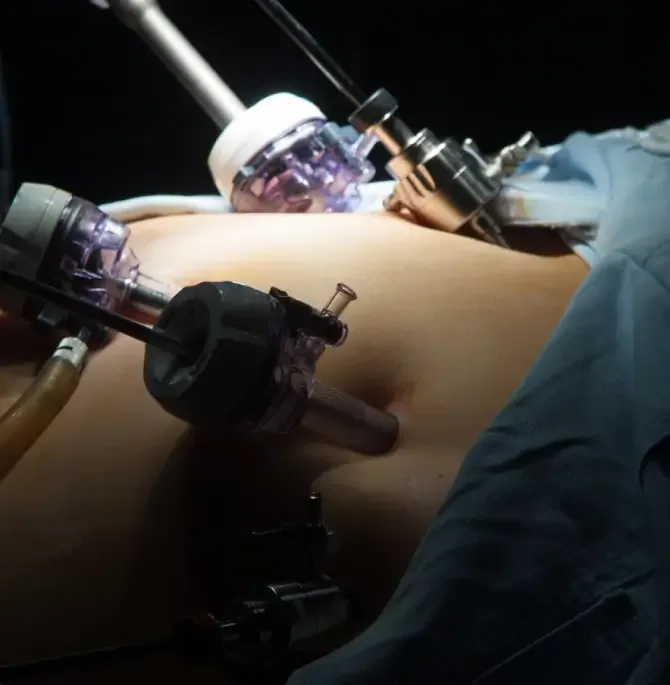
Dr. Chaudhry performs Transanal Hemorrhoidal Dearterialization (THD), a minimally invasive surgical technique for hemorrhoids. THD is a minimally invasive alternative to traditional excisional hemorrhoidectomy.
Dr. Chaudhry uses a Doppler ultrasound probe to identify the arterial blood vessels carrying blood to the hemorrhoidal tissue. Once identified, these blood vessels are tied off to prevent the blood flow, resulting in the natural reduction of the size of hemorrhoids.
For prolapsing hemorrhoids, the tissue is repositioned internally using a lifting suture technique. Because no cutting or removal of tissue occurs, the THD procedure results in much less pain compared to other surgical procedures, such as hemorrhoidectomy. The following are some benefits associated with this surgical technique:
- No hemorrhoid tissue is cut or removed
- Less post-operative pain than traditional surgery
- Same-day procedure in an outpatient setting
- THD is commonly used for internal hemorrhoids, including many prolapsing hemorrhoids.
- Many patients are able to return to normal activities within several days, although recovery times vary
- THD is associated with less postoperative pain compared with traditional excisional hemorrhoidectomy in many patients
THD is performed under anesthesia in an outpatient setting. The procedure is precise and effective, and patients usually go home the same day. Recovery is notably more comfortable than with traditional hemorrhoid surgery.
Most patients resume normal activity and return to work within four days. Dr. Chaudhry and his team provide comprehensive post-operative guidance and follow-up care throughout recovery.